If you spend any time in ultralight backpacking forums, you will hear one tent mentioned more than any other. The Durston X-Mid Pro 1 has become the quiet default recommendation for solo hikers stepping into the world of Dyneema Composite Fabric shelters.
It is not flawless. Nothing in this category is. But the more you compare it to its peers, the more the title of this post starts to make sense.
For context, I have owned a first-generation X-Mid Pro 1 since February 2023. Everything that follows comes from real ownership, not a spec sheet.
What the X-Mid Pro 1 Actually Is
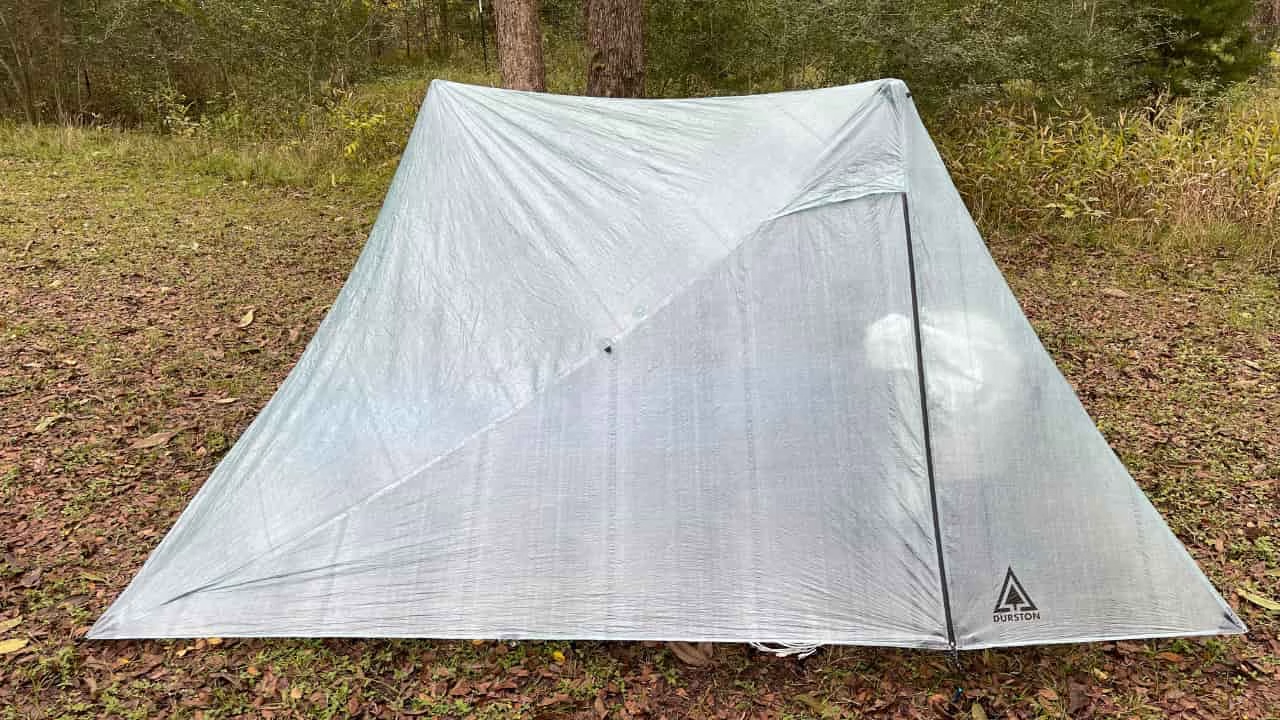
Before we explore why it earns its reputation, let’s cover the basics for anyone newer to this space. The X-Mid Pro 1 is a single-wall, trekking-pole-supported, one-person tent built from Dyneema Composite Fabric (DCF), the lightest waterproof tent material on the market.
It uses two trekking poles set at the peaks rather than one center pole. That choice shapes everything about how the tent feels inside.
Designed by Dan Durston, a small-batch Canadian gear maker with a near-cult following, the tent weighs roughly 15.5 to 17.1 ounces depending on the floor option you choose. That places it among the lightest fully enclosed shelters you can buy.
Why the Word “Perfect” Even Comes Up
In ultralight gear, perfection is a moving target. Every shelter design forces a tradeoff between weight, weather protection, livability, and price. Most tents pick two of those four and call it a day.
The X-Mid Pro 1 is unusual because it refuses to commit fully to any single tradeoff. It tries to be light, livable, weather-worthy, and reasonably priced all at once. That ambition is exactly why people keep using the word perfect when they talk about it, even when they know better.
The Strengths That Built the Reputation
Setup is genuinely simple. Most trekking pole tents have a learning curve that frustrates beginners for the first ten pitches. The X-Mid uses a rectangular floor plan with four corner stakes and two trekking poles. Stake the rectangle, raise the poles, done. My original order shipped with eight aluminum V-stakes, which is more than enough for normal conditions plus extra for storm guying.
The interior feels enormous for its weight class. A six-foot hiker fits with room to spare at both ends. Many ultralight tents shave grams by tapering the foot box or narrowing the head end. The X-Mid keeps its width at 32 inches across and stays that wide well above the floor.
Two doors and two vestibules mean you have a wet side and a dry side, ventilation options, and a place to cook out of the rain without crawling over your gear.
The price is the quiet revolution. My first-generation model came in at $628 in early 2023, which felt like a lot until I started comparison shopping. Other DCF shelters from Zpacks, Hyperlite, or Tarptent’s lightest builds typically run several hundred dollars more. It is still expensive, but it is not absurd.
The Honest Imperfections
Here is where the title earns its weight. The X-Mid Pro 1 has real shortcomings that you should understand before you spend the money.
It is not freestanding. You need ground that takes stakes. Wooden tent platforms found in the Whites and parts of the Appalachian Trail require workarounds. Slickrock in Utah will frustrate you without specialty stakes and extra cord.
Condensation is real. Every single-wall DCF tent collects moisture on the inside walls during humid or cold nights. The X-Mid handles it better than most thanks to peak vents and drainage mesh at the head and foot, but it does not eliminate the problem. After several seasons in mine, I still carry a small pack towel for morning wipe-downs.
The footprint is large. Because the design uses two poles set diagonally, the staked-out shape takes more flat ground than a typical one-person tent. Densely wooded sites can be hard to fit. There is a “skinny pitch” mode that helps in tight spots, but it requires extra setup effort.
DCF itself has limits. It is incredibly strong against tension and waterproof pressure, but it is less abrasion resistant than woven nylons. Rough granite, pine needles, and careless folding all shorten the life of a DCF shelter.
Packed size is bulkier than equivalent silnylon tents. DCF does not compress the same way woven fabrics do. New buyers expecting a fist-sized bundle are sometimes surprised.
So Why Does It Keep Winning?
Look at the competition. Zpacks Plex Solo is lighter but uses a single center pole and a more cramped interior. Hyperlite Mid 1 is rugged but pricier and tighter. Tarptent Aeon Li is excellent but has its own quirky geometry that takes practice.
Each competing tent wins one category. The X-Mid Pro 1 finishes in the top three of every category that matters. That consistency, not dominance, is what makes it the closest thing to perfect.
It is the tent that disappoints the fewest people in the most situations.
Who This Tent Is Actually Right For
If you are new to DCF and intimidated by the price of getting it wrong, the X-Mid Pro 1 is the safest first DCF purchase you can make. The setup forgives mistakes, the geometry forgives uneven sites better than most trekking pole tents, and the price stings less than the alternatives.
It suits thru-hikers, weekend backpackers, and bikepackers who already carry trekking poles or who want to use Durston’s carbon fiber adjustable poles instead. Tall hikers gain the most from its livability advantage.
It is not the right tent for people who camp primarily on wooden platforms, those who want a freestanding pitch, or those who hike where condensation is constant and the only fix is a double-wall design.
The Bigger Lesson for Beginners
If there is one takeaway worth holding onto as you start exploring DCF shelters, it is this. The best tent for you is rarely the lightest, the most expensive, or the most hyped. It is the one whose imperfections you can live with on the trails you actually walk.
The X-Mid Pro 1 keeps showing up at the top of recommendations not because it solved the puzzle, but because it acknowledged that the puzzle cannot be solved. It picked a balanced set of compromises that work for the largest number of people.
That is what closest to perfect actually means in ultralight gear. Not the absence of flaws, but the presence of flaws you stop thinking about ten miles into your hike.
Three years into ownership of my first-generation model, that is still the most honest summary I can give. And for a beginner choosing a first DCF shelter, it is a much more useful definition of perfect than any spec sheet could provide.